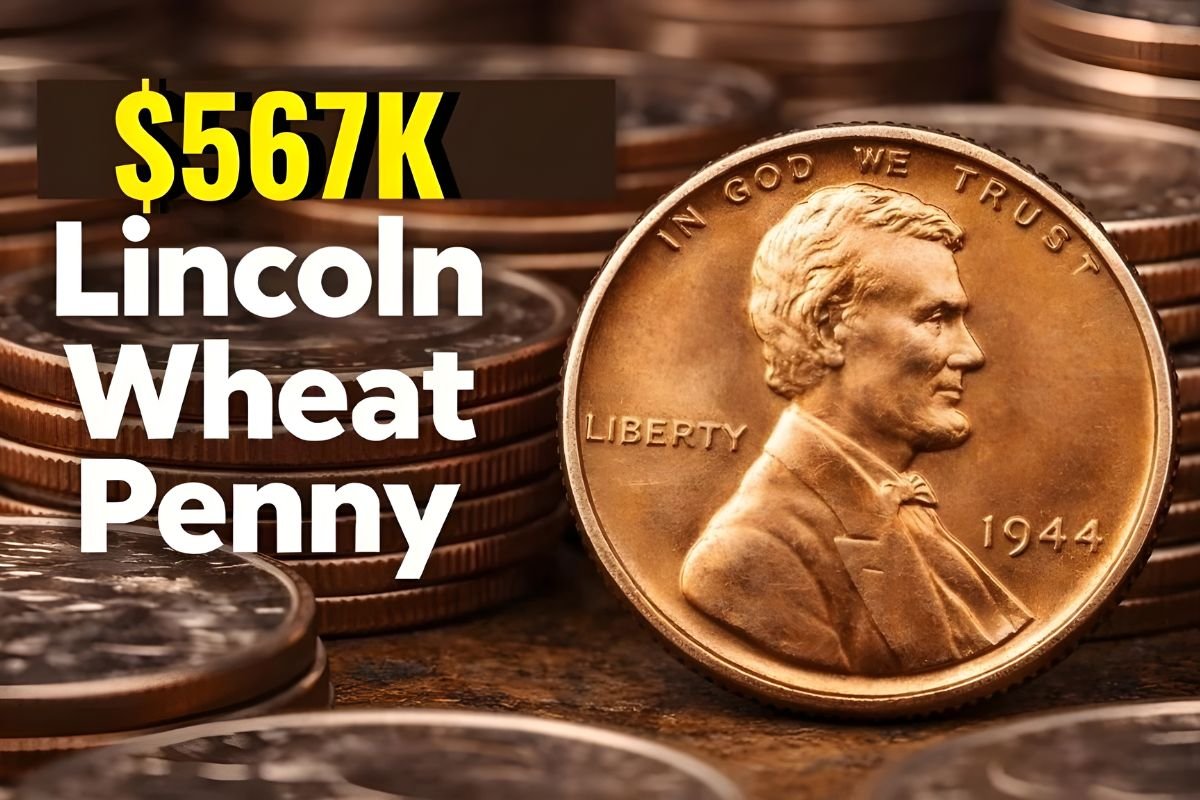
The rare Lincoln Wheat Penny, valued at $576,000, stands as one of the most extraordinary discoveries in American numismatics. This particular 1943 coin—struck in bronze rather than zinc-coated steel—has captured the attention of collectors worldwide. The story behind this penny illustrates how wartime manufacturing errors can inadvertently create precious treasures that later fetch sums large enough to be life-changing.
Wartime Manufacturing Error
During World War II, the United States Mint faced a severe copper shortage, as the metal was in high demand for the production of ammunition and military equipment. In 1943, the government decided to strike pennies using zinc-coated steel instead of the traditional bronze alloy. However, a few bronze planchets (coin blanks) from 1942 remained lodged in the machinery and were accidentally struck with the 1943 date, resulting in one of the most famous minting errors in history.
Authentication and Verification Process
Collectors who suspect they possess a valuable 1943 bronze penny must undergo rigorous authentication procedures to determine its true worth. First, the coin should be tested with a magnet; genuine bronze pennies do not adhere to a magnet, whereas steel pennies do. Subsequently, professional grading services verify the coin’s weight; authentic bronze coins should weigh approximately 3.11 grams, while their steel counterparts weigh 2.7 grams. Advanced metallurgical testing confirms the coin’s precise composition and aids in identifying the counterfeit coins that occasionally surface on the market.
Market Value Fluctuations
The price of $576,000 represents the highest sale ever recorded for a 1943 bronze Lincoln Wheat Penny—a specimen that was in exceptional condition. However, not all coins command such high prices, as a coin’s value depends significantly on the quality of its preservation and its provenance. A coin graded MS-64 by the Professional Coin Grading Service may sell for anywhere between $250,000 and $350,000, whereas lower-graded coins (though still in good condition) typically fetch between $100,000 and $200,000 at major auctions.
Known Coins and Their Rarity
Experts estimate that, across all three mints operational that year, fewer than 20 genuine 1943 bronze pennies are currently known to exist. The Philadelphia Mint produced the majority of these known coins, while the Denver and San Francisco Mints each produced only one or two confirmed examples. Due to this extreme rarity, every new discovery becomes a significant numismatic event, attracting considerable media attention and intense interest from collectors within the coin community.
Historical Sales Records
| Year | Grade | Mint Mark | Sale Price | Auction House |
|---|---|---|---|---|
| 2010 | MS-64 | None (Philadelphia) | $1,700,000 | Legend Rare Coin Auctions |
| 2019 | MS-62 | None (Philadelphia) | $204,000 | Heritage Auctions |
| 2021 | AU-58 | None (Philadelphia) | $372,000 | Stack’s Bowers |
| 2018 | VF-35 | D (Denver) | $576,000 | Heritage Auctions |
Distinguishing Between Real and Fake
In the coin collecting market, there have been countless attempts to artificially fabricate 1943 bronze coins, employing a variety of fraudulent methods. Some counterfeiters plate common 1943 steel coins with a layer of copper, while others alter the dates on 1945 or 1948 bronze coins to read “1943.” Some particularly cunning fraudsters have even created entirely fabricated coins using bronze alloys appropriate to that era. Only third-party grading services equipped with advanced instrumentation can definitively distinguish genuine coins from these sophisticated fakes.
Impact on Collecting Culture
The existence of a coin valued at $576,000 has fundamentally altered the way Americans view the coins found in their pockets and those inherited from family. Millions of people have rummaged through jars of old coins in the hope of discovering their own fortune, thereby sparking a renewed interest in coin collecting among the younger generation. This phenomenon has bolstered educational initiatives regarding numismatics and inspired television programs dedicated to the hunt for treasures hidden within everyday circulation.
Investment Perspective Analysis
Financial advisors typically caution against viewing rare coins solely as investment vehicles—even those commanding headline-grabbing prices like $576,000. The market for ultra-rare pennies remains highly volatile, and years may sometimes pass between major auction opportunities. Furthermore, authentication costs, insurance premiums, and auction house fees can significantly erode net profits. Serious collectors typically acquire these coins for their historical significance and personal enjoyment, rather than for financial gain alone.
Preservation and Storage Requirements
Owners of valuable Lincoln Wheat Pennies should adopt museum-grade preservation techniques to maintain their condition and safeguard their investment. The coins should be stored in a climate-controlled environment with a stable humidity level between 30 and 50 percent. Professional-grade holders from certified grading services offer the best protection against environmental damage, wear and tear from handling, and atmospheric pollutants. Even minor flaws can diminish a coin’s value by thousands of dollars; therefore, proper storage is absolutely essential.
Legal Aspects and Ownership
The U.S. government initially raised questions regarding whether private citizens could legally own the 1943 bronze coins, given that these coins resulted from manufacturing errors rather than authorized production. However, courts have consistently ruled that these coins constitute legitimate property that entered circulation through no fault of the finders. Current owners possess clear legal title; however, provenance documentation strengthens claims of authenticity and can enhance the market value of the coins when sold at auction.
Scientific Research Value
Beyond their economic value, the 1943 bronze pennies provide metal experts and historians with invaluable insights into wartime manufacturing processes and the challenges of quality control. By analyzing these coins, researchers have sought to understand how bronze blanks—metal discs prepared for coinage—remained within the minting machinery during the transition to steel production. These studies have revealed significant details regarding mint operations during one of America’s most challenging eras and have also contributed to the improvement of modern manufacturing protocols.