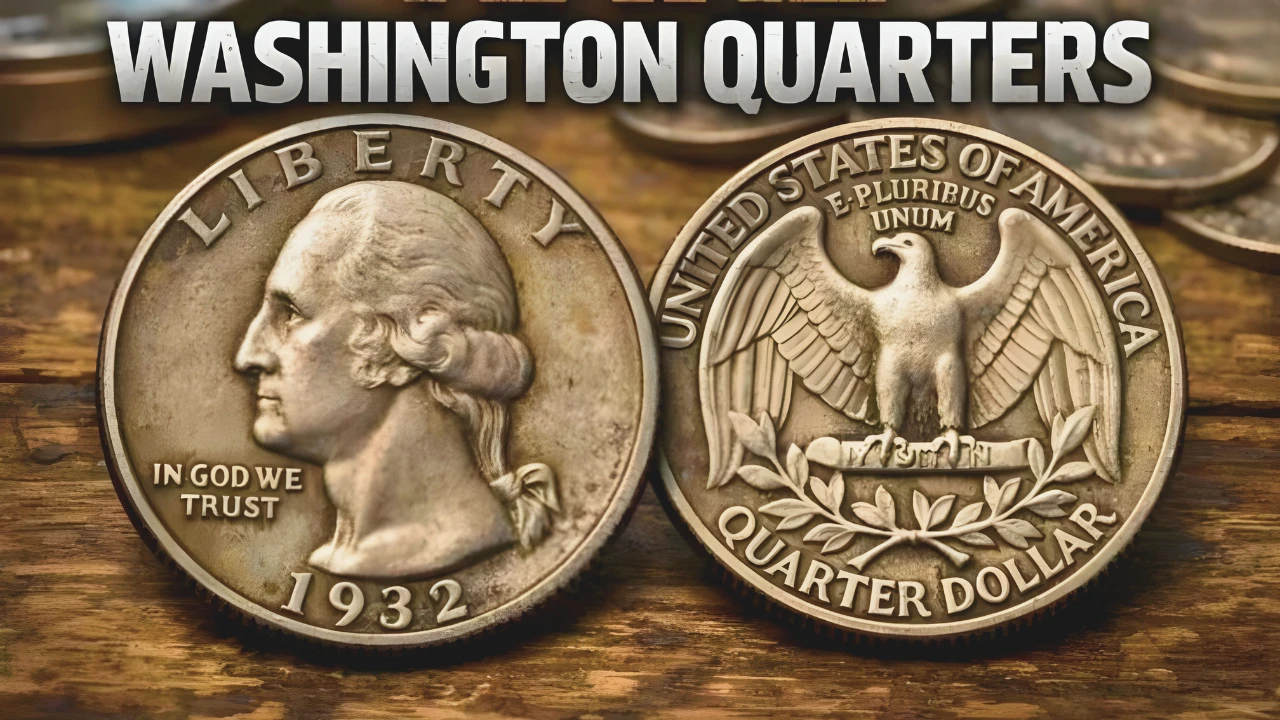
The 2026 Washington Quarter Value Guide begins by exploring why this everyday U.S. coin continues to capture the attention of numismatists today. First issued in 1932 in honor of George Washington, this coin has undergone numerous design and metallurgical changes over time. While most quarters are worth merely 25 cents, certain specimens command significantly higher values due to their rarity, silver content, and minting errors.
In 2026, collector demand continues to rise as individuals seek out the hidden value found both in circulating currency and within older collections. Some Washington Quarters now sell for hundreds or even thousands of dollars, depending on their unique characteristics and overall condition.
Overview of the Coin’s History
The Washington Quarter was first released to commemorate the bicentennial of George Washington’s birth, thereby serving as both a circulating coin and a commemorative piece. Its original design featured a portrait of Washington on the obverse and an eagle on the reverse—a design that remained the standard for decades.
Over time, new designs—such as the State Quarters and the National Park Series—were introduced; however, Washington’s portrait remained a constant feature. This extensive history has resulted in a wide array of collectible coins, the specific attributes of which continue to determine their market value today.
Factors Determining Value
In 2026, the value of a Washington quarter depends primarily on its rarity, condition, and collector demand. Coins produced in limited quantities—or those with very few surviving specimens—are considered the most valuable, particularly when they have been preserved in pristine condition.
Minting errors and unique structural characteristics also play a significant role in determining a coin’s overall valuation. The value of a coin containing a distinct error or a unique feature can appreciate much faster than that of a standard quarter; therefore, it becomes crucial for coin collectors to examine their coins meticulously.
The Impact of Silver Content
One of the most significant factors influencing a coin’s value is the amount of silver present in older quarters. Washington Quarters minted prior to 1965 contain 90% silver, providing them with a base value tied directly to the current market price of silver.
Even if these silver coins are in a worn condition, they are often worth far more than their face value—frequently fetching prices reaching several dollars. As silver prices fluctuate, the value of these quarters changes accordingly; this is why these coins prove to be highly attractive to both coin collectors and investors alike.
Examples of Coins with Rare Dates
Certain dates within the Washington Quarter series are classified as highly collectible due to their low mintage figures. The 1932-D and 1932-S quarters are among the most renowned examples, with high-quality specimens commanding prices reaching into the thousands of dollars.
Other valuable examples include “double die” coins and transitional coins, which are both rare and highly sought-after. Due to their historical significance and rarity, these coins frequently garner significant attention at auctions.
Types of Error Coins
Mint errors are a primary reason why certain Washington Quarters become exceptionally valuable. Common errors include double die strikes, off-center designs, and over-mintmarks, all of which create a distinct visual difference compared to standard coins.
These errors are rare because they result from mistakes that occurred during the production process. If clearly visible and authenticated, such coins could fetch a premium price in the 2026 collector’s market.
Price Comparison Table
Below is a simple table illustrating the estimated values of select Washington Quarters in 2026, based on their rarity and condition:
| Coin Type | Circulated Value | High-Grade Value |
|---|---|---|
| 1932-D Quarter | $200 – $1,000 | $10,000+ |
| 1932-S Quarter | $250 – $1,200 | $12,000+ |
| 1943 Doubled Die | $500 – $2,000 | $10,000+ |
| 1965 Silver Error | $3,000 – $8,000 | $20,000+ |
| Common Clad Quarter | $0.25 | $50 – $850 |
These values fluctuate based on grading and market demand; typically, professionally certified coins command higher prices.
Condition and Grading
A coin’s condition is one of the most significant factors influencing its value. Coins classified as “Mint State”—that is, those exhibiting very little to no signs of wear—are far more valuable than their circulated counterparts.
Professional grading services utilize a standardized scale to evaluate coins, and even a slight difference in grade can result in a substantial difference in price. This is why proper preservation of coins becomes an absolutely essential aspect of maintaining their long-term value.
Market Trends 2026
In 2026, the market for Washington Quarters is demonstrating steady growth, driven primarily by a growing public interest in rare coins and tangible assets. Collectors are now focusing specifically on high-quality coins that possess clear historical significance and are visually striking.
Another emerging trend is the growing awareness regarding “error coins”; an increasing number of people are now actively attempting to identify valuable and rare coins among those encountered in their daily transactions. Due to this heightened awareness and attention, the demand for rare coins is consistently rising, consequently driving up their prices.
Final Conclusion on Value
Regardless of the enthusiasm surrounding rare coins, the vast majority of Washington Quarters today remain worth only their face value. The true value of a coin lies in recognizing its unique characteristics—such as rare dates, silver composition, and errors that occurred during the minting process.
Understanding these factors enables collectors to distinguish between common coins and those of significant value. In 2026, the Washington Quarter continues to serve as a compelling example of how ordinary coins used in everyday transactions can, at times, prove to be unexpectedly valuable.