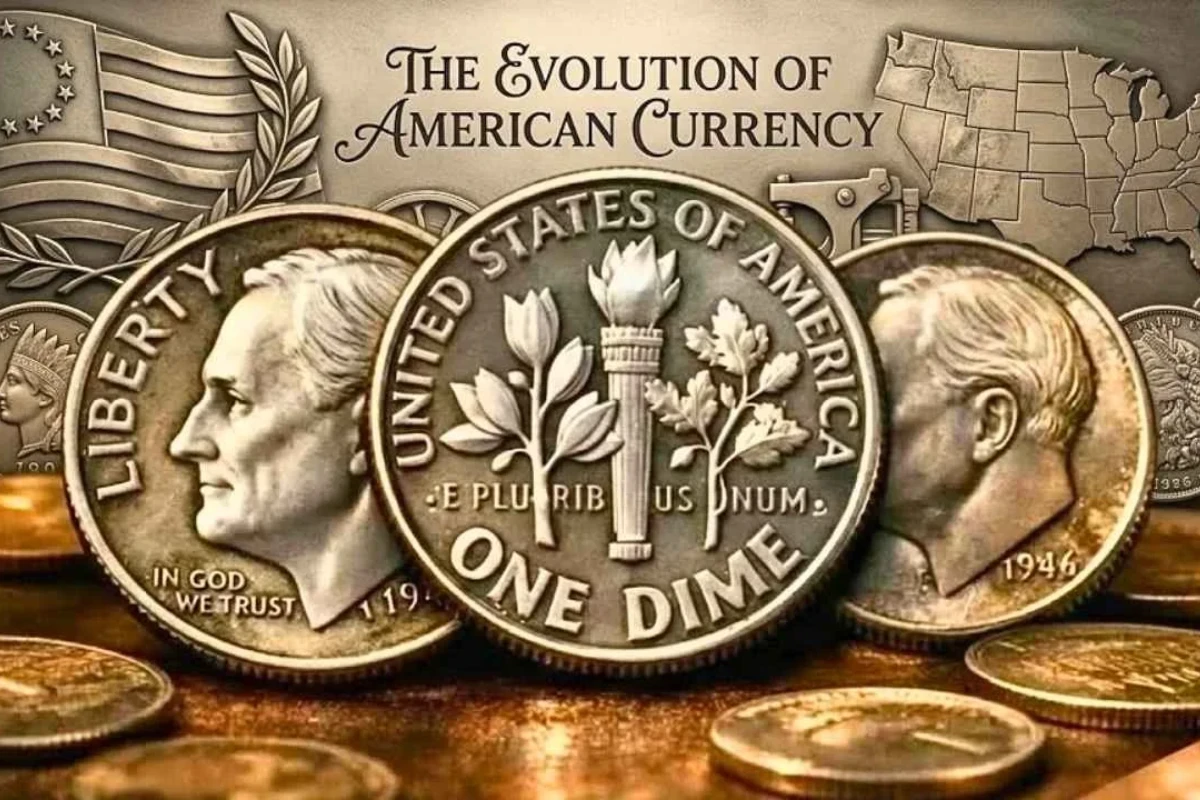
Roosevelt Dime Price Guide 2026: The Roosevelt Dime has been a staple of U.S. coinage since 1946, and even nearly eight decades later, coin collectors continue to show a keen interest in these ten-cent pieces. Understanding the current market values of Roosevelt Dimes in 2026 helps both seasoned numismatists and newcomers make informed decisions regarding their collections. The value of these coins varies significantly based on the mint mark, condition grade, and—for specific years of historical significance—the particular mintage.
Silver Content Matters
Roosevelt Dimes minted between 1946 and 1964 contain 90 percent silver, instantly giving them an intrinsic metal value far exceeding their face value. A pre-1965 Roosevelt Dime contains approximately 0.0723 troy ounces of pure silver. With silver prices fluctuating in 2026, the base bullion value of these coins—based on the current precious metals market—typically ranges between $1.80 and $2.50. Collectors are willing to pay a premium above this bullion value for coins in superior condition or those possessing unique characteristics.
Values for Common Dates
Most Roosevelt Dimes from the 1946–1964 era that have seen circulation tend to sell for a price hovering close to the value of their silver content. A worn dime minted at the Philadelphia Mint in 1955 might sell for $2.00 to $2.50, whereas an uncirculated specimen from the same year could fetch anywhere from $8 to $15. The distinction between circulated coins and those in pristine, “mint state” condition becomes even more pronounced with coins bearing earlier dates. Roosevelt Dimes from the late 1940s graded as “Gem Uncirculated” often fetch between $25 and $40, as very few coins from that era have survived in such impeccable condition.
Premium Value for Key Dates
Certain Roosevelt Dimes are exceptionally rare and command a significantly higher price compared to coins with common dates. The 1949-S coin is particularly difficult to find in high grades; examples in pristine mint state (graded MS-65) can sell for anywhere between $75 and $150. A 1955 “Proof” dime—specifically one featuring clearly defined “full bands” on the torch design on its reverse—can sell for $30 to $50, whereas most “Proof” coins from that era typically sell for $8 to $12. These specific dates offer collectors unique opportunities to acquire truly rare coins, even within an otherwise common series.
Modern Clad Coins
Beginning in 1965, Roosevelt Dimes (ten-cent coins) began to be struck from a copper-nickel alloy, containing absolutely no silver. These modern coins are typically worth only their face value, unless they possess some unique distinguishing feature. Coins exhibiting mint errors—such as those struck on incorrect planchets or produced by a doubled die—can sell for hundreds or even thousands of dollars. A sharply struck 1982 Philadelphia coin lacking a mintmark, if found in uncirculated condition, can be valued between $1 and $3. This demonstrates just how affordable most clad coins are for coin collectors of every budget.
The Market for Proof Coins
The U.S. Mint has been producing “Proof” versions of the Roosevelt Dime for coin collectors since 1950, with a brief hiatus between 1965 and 1967. Modern proof sets containing Roosevelt dimes—ranging from the 1990s through the 2020s—typically sell for $5 to $15 for the complete set. Older proof dimes from the 1950s command higher prices, and the value increases further for coins featuring special characteristics such as “cameo” and “deep cameo” finishes. A 1960 proof dime exhibiting a deep contrast—known as “deep cameo”—can sell for anywhere between $40 and $75, whereas a standard proof coin from the same year typically sells for $6 to $10.
Roosevelt Dime Price Guide
| Year | Circulated | Uncirculated | Proof Coins |
|---|---|---|---|
| 1946-1950 | $2.00-$3.00 | $12-$40 | $10-$25 |
| 1951-1960 | $2.00-$2.50 | $8-$25 | $6-$15 |
| 1961-1964 | $2.00-$2.50 | $5-$12 | $5-$12 |
| 1965-1980 | $0.10 | $0.50-$2.00 | $3-$8 |
| 1981-2000 | $0.10 | $0.25-$1.00 | $2-$6 |
| 2001-2026 | $0.10 | $0.20-$0.75 | $3-$8 |
Explaining the Impact of Grading
The condition grade assigned to a Roosevelt Dime has a profound impact on its market value, particularly in the case of silver coins. A 1950-D dime in average condition might sell for around $2.25, whereas that same coin, if graded MS-67, could fetch $200 or more. Professional grading services, such as PCGS and NGC, authenticate coins and assign them a grade based on a 70-point scale. Collectors often pay a premium for certified coins, as third-party grading mitigates risk and ensures a consistent standard across the entire market.
Identifying ‘Full Bands’
The reverse side of the Roosevelt Dime features a torch, characterized by horizontal bands running across its center. Coins on which these bands are fully formed and clearly distinct are designated by grading services as having “Full Bands” or “FB.” This designation can double or even triple the value of common-date coins in Mint State condition. A 1963 dime in MS-65 condition might be valued at $10, whereas that same coin with “Full Bands” could be sold for anywhere between $25 and $35. Collectors striving to assemble “Registry Sets” often compete fiercely with one another to acquire these “Full Bands” coins.
Regional Market Variations
The prices of Roosevelt Dimes can vary significantly across different regions of the United States and across different sales platforms. Coins sold through major auction houses often command higher prices than identical coins sold on online marketplaces or at local coin shops. This disparity reflects factors such as buyer confidence, guarantees of authenticity, and the competitive bidding environment inherent to these venues. Dealers typically pay only 60 to 80 percent of the retail value when purchasing coin collections, allowing them to cover their overheads and ensure a profit margin upon resale.
Investment Perspective Today
Roosevelt dimes offer an accessible entry point into coin collecting, requiring a relatively modest investment for most dates within the series. Assembling a complete set of “circulation strike” coins minted between 1946 and 1964 can cost anywhere from $300 to $800, depending on the desired grade of the coins. This series offers the potential for consistent appreciation in value—particularly for higher-grade specimens—while also maintaining significant liquidity due to its silver content. As of 2026, market demand for these coins remains robust; there are currently no indications that collector interest in these historically significant coins—integral to the legacy of American numismatics—is waning.