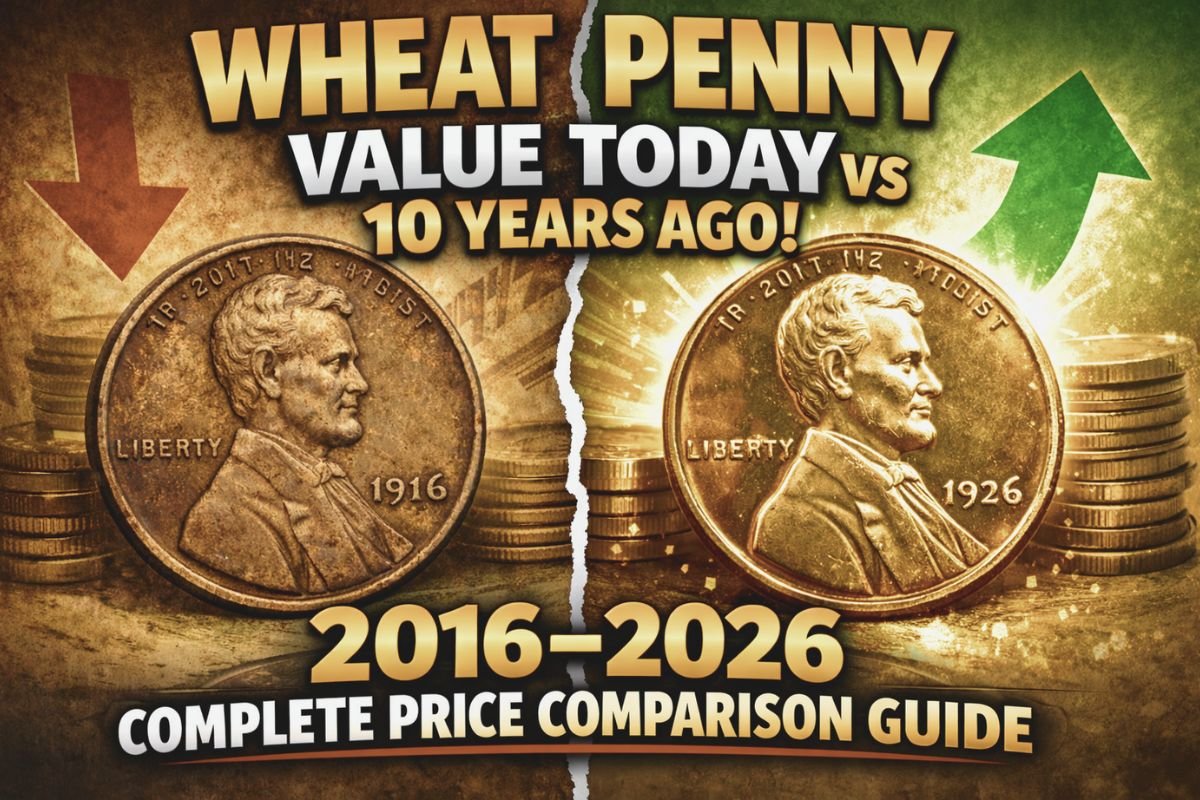
Wheat Penny Value Today vs 10 Years Ago: Comparing the current value of a wheat penny to its value a decade ago reveals striking differences that surprise many collectors and the general public alike. Minted between 1909 and 1958, the values of these iconic copper coins have fluctuated significantly due to factors such as collector demand, metal content, and broader market conditions. Understanding how their value has evolved over the past ten years helps both seasoned numismatists and newcomers make informed decisions regarding their collections.
Market Transformation Overview
The market for wheat pennies has undergone substantial changes since 2016; at that time, collector interest was moderate, and prices remained largely stable. Back then, common-date wheat pennies in average condition sold for just a few cents above their face value, while coins with specific key dates fetched slightly higher prices—though still not exceptionally high. Today’s market presents a completely different picture, where increased competition among buyers and growing awareness regarding rare varieties have driven up coin prices significantly across almost all categories.
Common Date Price Evolution
Common Wheat Pennies from the 1940s and 1950s—coins that were once widely circulated—sold for approximately two to five cents apiece in wholesale lots in 2016. Today, those same coins, depending on their condition and buyer demand, sell for anywhere between eight and fifteen cents. This appreciation in value is driven by the growing interest of younger collectors entering the hobby, as well as by investors seeking tangible assets amidst the economic uncertainty of recent years.
Key Date Appreciation Patterns
The prices of certain “wheat pennies” have experienced a dramatic surge—a rate of appreciation far exceeding the typical growth observed in the collectibles market. The 1909-S VDB—widely regarded as the “Holy Grail” of Wheat Cents—traded for approximately $800 to $1,200 in 2016 for circulated examples in good condition. Today, that very same coin, in identical condition, fetches between $1,500 and $2,500; in some grading categories, its value has appreciated by more than 100 percent. Similar price surges have been observed in other key-date coins, such as the 1914-D and 1931-S issues.
Condition Grading Impact Differences
Between 2016 and the current market climate, the premium placed on coins in exceptional condition has increased significantly. A 1950-D Wheat Penny in average, circulated condition might have sold for around twenty-five cents a decade ago—and it continues to trade for roughly the same amount today. However, for coins of that same date in uncirculated, “mint-state” condition, the value has climbed from approximately five dollars to twelve dollars or more. Collectors are now willing to pay a substantial premium for coins that exhibit minimal wear and possess strong visual appeal.
Copper Content Influence Factors
The intrinsic metal value of wheat pennies plays a supporting role in their overall collectible value, as these coins consist of 95 percent copper. Throughout most of 2016, copper prices fluctuated between $2.00 and $3.00 per pound, placing the “melt value” of each individual Wheat Penny at approximately 1.5 cents. Currently, the price of copper stands at approximately $4.00 per pound, which adds about two cents to the intrinsic value of the base metal; this establishes a higher baseline for collectible values and makes bulk collecting a more attractive endeavor.
Error Variety Premium Expansion
Compared to ten years ago, wheat pennies featuring minting errors have become particularly sought-after. Doubled die varieties, off-center strikes, and repunched mint marks—which in 2016 were of interest primarily to expert collectors—are now capturing the attention of the general public. A 1955 doubled die obverse Wheat penny in good condition traded for approximately $1,000 at that time; today, however, its value easily exceeds $2,000, with premium examples fetching prices of $3,000 or even higher, depending on their clarity and state of preservation.
Comparative Value Data Analysis
| Wheat Penny Type | 2016 Average Value | 2026 Current Value | Percentage Change |
|---|---|---|---|
| Common Dates (1940s-1950s) | $0.03 – $0.05 | $0.10 – $0.15 | +200% to +300% |
| 1909-S VDB (Circulated) | $900 – $1,200 | $1,500 – $2,500 | +67% to +108% |
| 1914-D (Good Condition) | $175 – $225 | $300 – $425 | +71% to +89% |
| 1931-S (Excellent Condition) | $85 – $110 | $140 – $180 | +65% to +64% |
| 1955 Double Die (Good) | $900 – $1,100 | $2,000 – $2,800 | +122% to +155% |
Online Marketplace Effect Examination
Digital platforms have revolutionized the trade of wheat pennies since 2016 by instantly connecting sellers with buyers across the globe. This accessibility has dismantled the geographic barriers that once limited competition and price discovery. Auction sites and specialized numismatic marketplaces have established transparent pricing mechanisms, where current market values are determined based on real-time bidding. Consequently, this has intensified upward pressure on prices, as collectors compete more vigorously to acquire rare and highly sought-after coins.
Generational Interest Shift Dynamics
Young collectors—who are entering the world of numismatics through social media and online communities—have breathed new life into the collecting of Wheat Pennies since 2016. This demographic employs distinct purchasing methods and is willing to pay a premium for coins that their grandparents might have spent without a second thought. Their engagement via digital platforms serves as a strong indicator of demand within the coin market, driving price appreciation across the entire spectrum—from common dates to rare and highly valuable specimens.
Investment Perspective Considerations Today
Over the past decade, the status of the wheat penny has evolved from a mere hobby item into a recognized alternative investment asset. Portfolio diversification strategies now increasingly incorporate rare coins as a hedge against inflation and as a tangible store of value. The influx of institutional and semi-professional interest has intensified competition for high-grade coins, while simultaneously bolstering overall market stability. The coins that have experienced the most significant appreciation in value typically possess a combination of rarity, historical significance, and exceptional preservation quality.