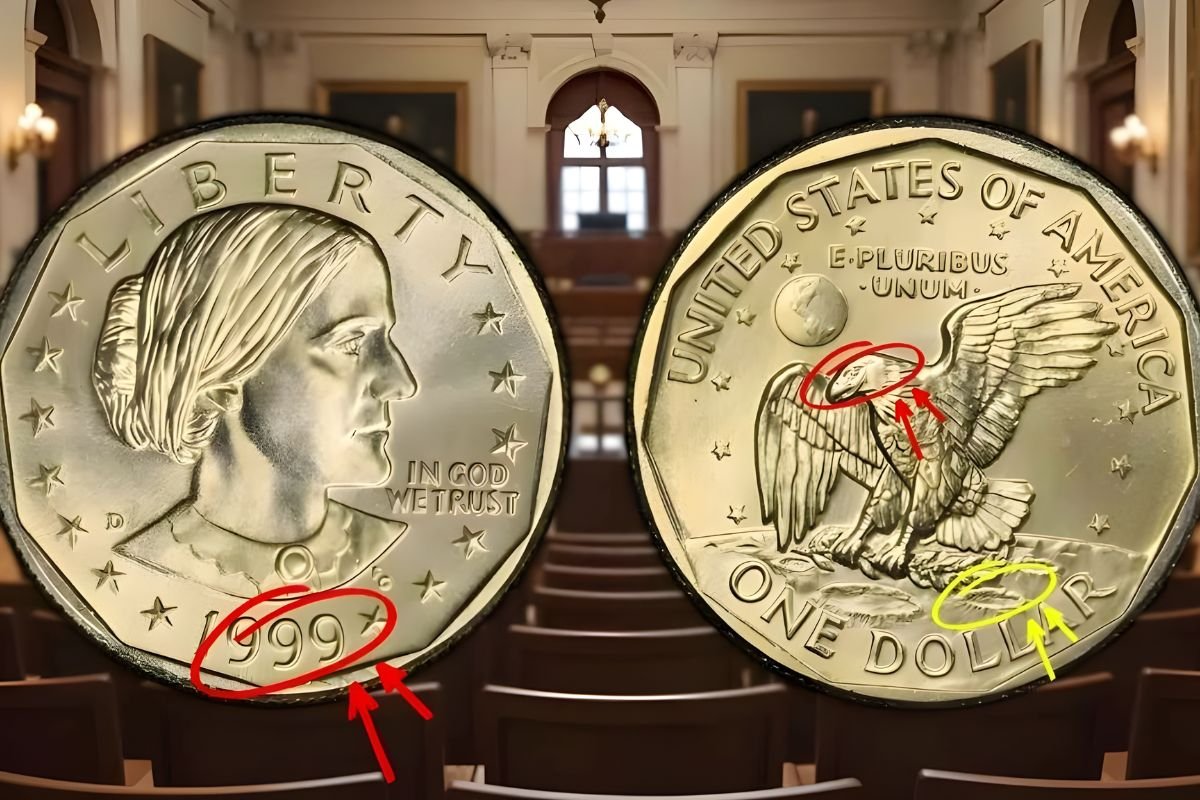
The Susan B. Anthony dollar represents one of the most significant—as well as controversial—moments in the history of United States coinage. Introduced in 1979, this small-sized dollar coin was the first circulating U.S. coin to feature the likeness of a real woman rather than a mythical figure. The coin honored Susan B. Anthony, a pioneering activist who campaigned tirelessly for women’s suffrage, fighting consistently for this right throughout the late 19th and early 20th centuries.
Historical Background and Context
The decision to create a small-sized dollar coin was driven not merely by a desire to pay tribute to an individual but by economic necessity. The U.S. government sought to reduce the production costs associated with paper dollar bills, as these notes tended to wear out very quickly once in circulation. Coins lasted significantly longer than paper currency, offering the potential to save millions of dollars over time on replacement costs. The selection of Susan B. Anthony’s image for this coin proved to be a watershed moment in the tradition of American numismatics.
Design and Physical Characteristics
The Susan B. Anthony dollar had a diameter of 26.5 millimeters, making it considerably smaller than previous dollar coins, such as the Eisenhower dollar. This compact size, however, became one of its greatest liabilities in terms of public acceptance. The coin’s obverse featured a portrait of Susan B. Anthony facing right, designed by Chief Engraver Frank Gasparro. The reverse displayed a variation of the Apollo 11 mission insignia, depicting an eagle landing on the moon.
Public Reaction and Issues
Susan B. Almost immediately after the Anthony dollar was introduced into circulation, the American public rejected it almost entirely. The primary reason for this rejection was its size and texture, which bore a striking resemblance to the ‘quarter dollar’ coin. Due to this similarity, confusion frequently arose at cash counters and vending machines across the country. Both store employees and customers struggled to quickly distinguish between the two coins, resulting in delays in daily transactions and causing inconvenience to the public.
Production and Mintage Figures
The U.S. Mint produced the Susan B. Anthony dollar at three different facilities: Philadelphia, Denver, and San Francisco. These coins were produced in four distinct years: 1979, 1980, 1981, and 1999. Production was resumed in 1999; this served as a temporary measure adopted while the Mint was in the process of developing the design for the new ‘Sacagawea dollar. ‘The total mintage of these coins exceeded 800 million; however, due to public opposition, the vast majority of them never actively entered circulation.
| Year | Philadelphia Mint | Denver Mint | San Francisco Mint | Total Mintage |
|---|---|---|---|---|
| 1979 | 360,222,000 | 288,015,744 | 3,677,175 | 651,914,919 |
| 1980 | 27,610,000 | 41,628,708 | 3,554,806 | 72,793,514 |
| 1981 | 3,000,000 | 3,250,000 | 3,492,000 | 9,742,000 |
| 1999 | 29,592,000 | 11,776,000 | 750,000 | 42,118,000 |
Assessment of Economic Impact
The federal government incurred significant financial consequences due to the public’s failure to accept the Susan B. Anthony dollar. Billions of these coins remained unused in Federal Reserve vaults, representing a waste of production resources and missed opportunities for cost savings. The intended reduction in the printing of paper dollars was never realized, as Americans continued to prioritize banknotes over coins for their daily transactions.
Collector Value Dynamics
In today’s collector market, the value of most Susan B. Anthony dollars does not exceed their one-dollar face value. The exception to this rule lies in coins possessing specific characteristics that appeal to numismatists. “Proof” editions minted in San Francisco command higher prices—particularly those featuring a “Deep Cameo finish.” Collector interest in the 1979-S and 1981-S proof coins remains moderate, while standard circulation strikes are readily available.
Assessing Cultural Significance
Despite its commercial failure, the Susan B. Anthony dollar achieved several significant symbolic victories for American society. It normalized the presence of real women on circulating currency, thereby paving the way for future coin designs featuring historical female figures. The coin also sparked broader discussions regarding gender representation within national iconography and official commemorative practices. These discussions subsequently influenced decisions concerning both currency design and the selection of individuals chosen for commemoration.
Lessons for Future Coinage
The experience of the Susan B. Anthony dollar provided the U.S. Mint with crucial insights into the factors governing coin design and public acceptance. Distinctive sizing emerged as a critical element for ensuring the successful circulation of coinage. The subsequent Sacagawea dollar was therefore designed with a unique golden hue and a smooth edge to avoid the confusion that had plagued the Anthony dollar. Modern coin designers now prioritize tactile and visual distinctiveness when creating new coin denominations.
Compatibility with Vending Machines
One area in which the Susan B. Anthony dollar achieved a measure of success was in its integration into vending machines and public transportation systems. The standardized size of the coin worked well with automated payment systems, particularly in postal service stamp machines and public transportation fare boxes. Some public transit authorities actively promoted these dollar coins, as they required less maintenance compared to paper banknotes. However, this limited utility never translated into widespread public circulation.
Legacy in American Numismatics
The Susan B. Anthony dollar holds a unique place in the history of American numismatics; it is viewed as both a failure and a milestone. Numismatists study this coin as a “case study” to understand how design-related decisions influence the rate of currency acceptance. The story of this coin demonstrates that honoring significant historical figures does not guarantee commercial success unless factors related to the coin’s practical utility are also taken into consideration. Commemorative coins issued subsequently learned from these mistakes, striking a balance between symbolic significance and the requirements of functional design.