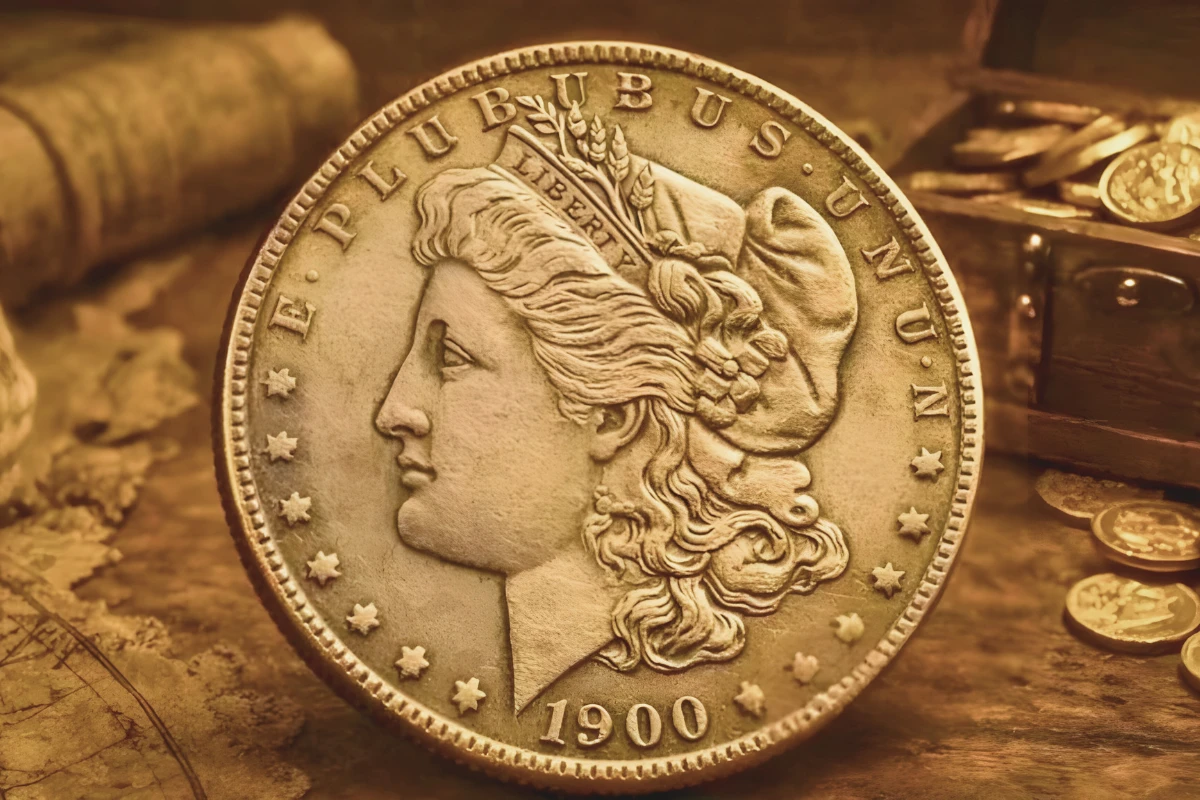
The $470 million rare 1900 Morgan Silver Dollar has become a major topic of conversation among both coin collectors and the general public. This staggering figure has circulated widely across social media platforms and online forums, creating confusion regarding the actual value of these historic coins. While the 1900 Morgan Silver Dollar is indeed a collectible piece of American numismatic history, the reality of its value stands in stark contrast to the sensational claims that have captured public attention.
Historical Background
The Morgan silver dollar was minted from 1878 to 1904 and again in 1921, marking a significant era in the history of U.S. coinage. Named after its designer, George T. Morgan, these coins were produced during a time when silver mining interests were lobbying for increased silver coinage production. The 1900 edition was minted at three different locations: Philadelphia, New Orleans, and San Francisco; millions of coins were produced at each location that year.
The Truth Behind the Viral Claim
The $470 million figure associated with the 1900 Morgan Silver Dollar stems from misleading social media posts and clickbait articles that have disseminated misinformation. This figure does not represent the value of any single coin; rather, it appears to be a fabricated or grossly exaggerated claim designed to grab attention. No 1900 Morgan Silver Dollar has ever sold for anywhere near this amount, nor has any reputable coin auction house or professional grading service ever authenticated such a valuation.
Current Market Values
The actual value of a 1900 Morgan Silver Dollar varies significantly depending on its mint mark, condition, and rarity. A common, circulated coin from the Philadelphia Mint typically sells for between $30 and $50, while uncirculated coins can fetch anywhere from $60 to $150. Coins minted in San Francisco command higher prices due to their relative rarity; uncirculated examples, depending on their grade, can sometimes reach values ranging from $200 to $400.
The Impact of Condition Grading
Professional coin grading services utilize the 70-point Sheldon scale to evaluate coins, and this grading has a direct impact on their value. A 1900 Morgan Silver Dollar graded MS-60 (Mint State) might be worth $75, whereas the very same coin graded MS-65 could be valued at $300 or even more. Exceptional coins graded MS-67 or higher are rare and can reach four-figure values; however, even these premium coins fall far short—by millions of dollars—of the exaggerated claims sometimes circulated among the public.
Variety in Mint Marks
The three distinct mint marks found on the 1900 Morgan Silver Dollar determine varying values for collectors. The Philadelphia Mint produced over 8.8 million coins bearing no mint mark, making them the most common variety. New Orleans produced approximately 12.5 million coins bearing the “O” mark, while San Francisco produced only 3.5 million coins with the “S” mint mark, making it the most valuable variety among those found in standard circulation.
Authentication and Counterfeits
Unfortunately, due to the popularity of the Morgan Silver Dollar, counterfeit coins are being produced on a large scale—particularly those featuring rare dates and mint marks. For high-value transactions, professional authentication through services such as PCGS or NGC is essential. Online marketplaces are rife with counterfeit coins, and—swayed by exaggerated claims regarding value—naïve buyers often fall victim to fraud when they purchase unauthenticated coins in the hope of realizing extraordinary profits.
Investment Perspective Analysis
While the Morgan Silver Dollar constitutes a legitimate collectible investment, expectations must be grounded in reality. These coins have demonstrated consistent appreciation in value over decades; however, they should not be viewed as “lottery ticket” investments, but rather as a component of a diversified collecting strategy. The precious metal content alone provides a fundamental baseline value; since each coin contains approximately 0.77 ounces of silver, this establishes a minimum intrinsic value tied to commodity market prices.
Why Misinformation Spreads
Viral claims regarding coins of extreme value persist because they capitalize on the universal human fantasy of discovering hidden wealth. The emotional allure of unearthing a treasure within inherited heirlooms or loose change resonates deeply with users across social media platforms. Content creators exploit these aspirations with sensational headlines, recognizing that extraordinary claims generate clicks and shares—even if the underlying information lacks a factual basis or proper context.
Comparative Coin Values
To contextualize the claim of a $470 million valuation, examining actual sales records of rare coins provides a useful perspective. The 1794 “Flowing Hair Silver Dollar” currently holds the record for the highest price ever paid for a single coin—having sold for $10 million in 2013. Even the rarest varieties of the Morgan Silver Dollar—such as specific “proof” specimens or exceptionally scarce examples—have fetched prices in the hundreds of thousands of dollars, rather than in the hundreds of millions.
| 1900 Morgan Dollar Type | Common Price Range | Premium Grade Price |
|---|---|---|
| Philadelphia (No Mark) | $30 – $150 | $200 – $800 |
| New Orleans (O) | $30 – $150 | $200 – $700 |
| San Francisco (S) | $50 – $200 | $300 – $1,500 |
| Proof Specimens | $2,000 – $8,000 | $10,000 – $25,000 |
Collector Community Response
Experienced numismatic experts have consistently debunked the $470 million claim, expressing frustration over how such misinformation damages the credibility of the hobby. Professional organizations and certification services regularly issue warnings regarding inflated valuations that mislead newcomers. The reputable collector community emphasizes education, proper research, and verification through established channels, rather than relying on viral social media posts for pricing information.
Factors of Genuine Rarity
Beyond the standard variations in mint marks, certain 1900 Morgan Silver Dollars command a premium price based on factors of genuine rarity. Proof coins—minted specifically for collectors rather than for general circulation—are exceptionally rare; only 912 proof specimens were struck in 1900. Furthermore, coins featuring specific die varieties, minting errors, or exceptional toning patterns can fetch significantly higher prices than standard coins, though their value still falls far short of the figures cited in viral claims.