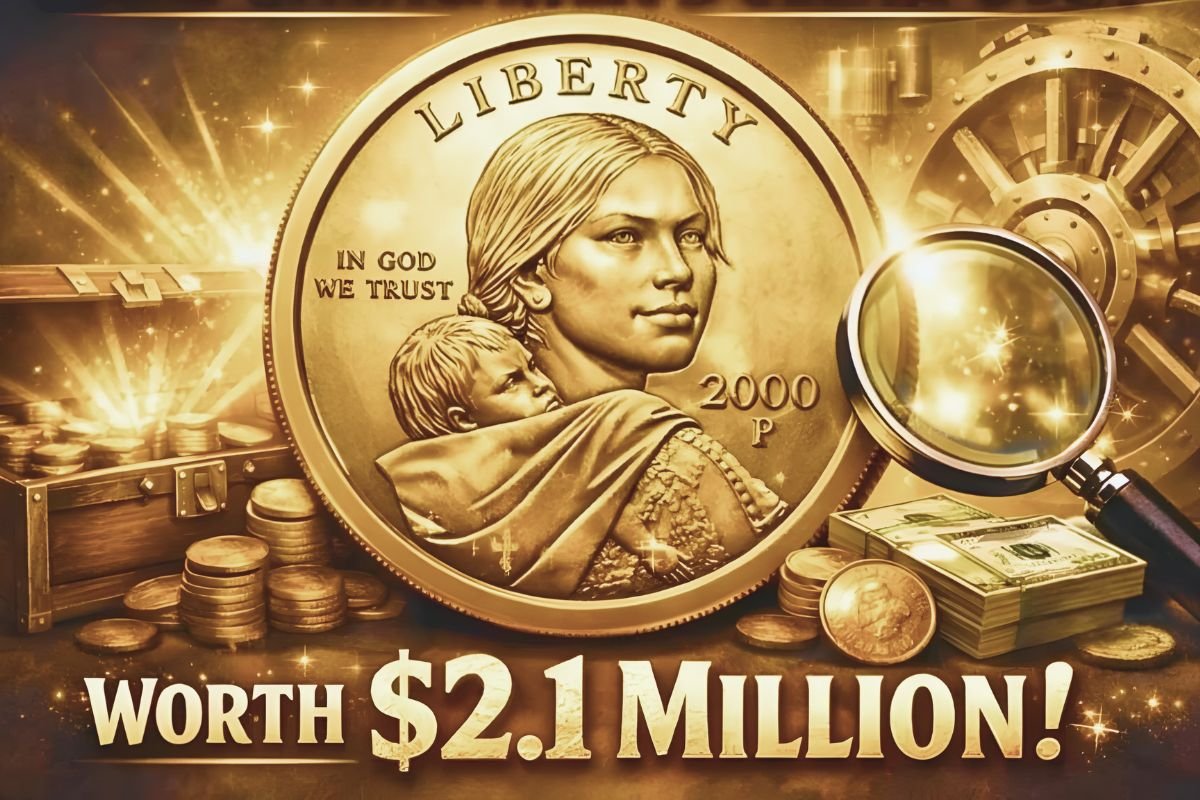
$2.1M Sacagawea Dollar 2026 Value: The valuation of $2.1 million for a Sacagawea dollar in 2026 stands as one of the most extraordinary figures in modern numismatics to date. While standard Sacagawea dollars typically circulate at face value or slightly above, certain rare varieties and error coins have captured the attention of serious collectors willing to pay astronomical sums. The multi-million dollar valuation is attributed to exceptional specimens possessing unique minting errors, pristine condition, or historical significance that set them apart from standard circulation coins.
Sacagawea Dollar Legacy
The Sacagawea dollar was first issued in 2000, replacing the Susan B. Anthony dollar, and features the likeness of the Shoshone woman who guided the Lewis and Clark Expedition. The coin’s distinctive golden hue is due to its manganese-brass composition, making it easily distinguishable from other coinage. Despite its attractive design and historical significance, the Sacagawea dollar failed to gain widespread popularity in everyday transactions, remaining primarily a collector’s item and a symbol of American heritage.
The Reason Behind the Multi-Million Dollar Value
Extraordinary valuations—such as $2.1 million—do not stem from standard production coins, but rather from exceptional circumstances that create numismatic treasures. Error coins—such as those struck on incorrect planchets or those exhibiting dramatic die cracks—can command values unimaginable to the average collector. The rarity factor plays a pivotal role, as collectors recognize that only a handful of such coins may exist globally, leading to fierce competition at major auctions.
Valuable Error Varieties
The most valuable Sacagawea dollars typically involve minting errors where the coin has been struck on a planchet intended for a different denomination. The famous 2000 “Cheerios Dollar”—distinguished by its enhanced tail feathers on the reverse side—has sold for over $25,000 in high grades. “Mule errors”—instances where the obverse and reverse dies from different coin series are accidentally paired together—represent the pinnacle of error coin collecting and, when certified, can command values reaching into the six or seven figures.
Grading Standards and Premium Prices
Professional coin grading services such as PCGS and NGC assign numerical grades ranging from 1 to 70, with higher numbers indicating superior preservation. A Sacagawea Dollar graded MS-70—the symbol of perfection—sells for a significantly higher price than coins graded MS-65 or lower. A difference in grade can result in a price disparity of thousands of dollars, as collectors highly value coins that exhibit no contact marks, possess full original luster, and feature flawless striking when viewed under magnification.
Modern Mintages and Rarity
The United States Mint continues to produce Sacagawea Dollars primarily for collectors, with annual mintage figures varying significantly based on demand and commemorative programs. Since 2009, the design on the coin’s reverse side has changed annually to honor the contributions of Native Americans, thereby creating distinct collectible series within the broader Sacagawea Dollar program. Coins from years with lower mintages naturally command higher prices; however, most coins remain affordable unless they possess additional desirable attributes, such as minting errors or exceptional preservation.
Market Data Overview
| Year Range | Standard Circulated Value | High-Grade MS-68+ | Error Coins |
|---|---|---|---|
| 2000-2005 | $1.00 – $3.00 | $50 – $200 | $5,000 – $50,000+ |
| 2006-2010 | $1.00 – $2.50 | $40 – $150 | $3,000 – $30,000+ |
| 2011-2020 | $1.00 – $2.00 | $35 – $120 | $2,500 – $25,000+ |
| 2021-2026 | $1.00 – $2.00 | $30 – $100 | $2,000 – $2,100,000 |
Authentication is Essential
Given that the value of certain coins can reach into the millions, the process of authentication becomes absolutely critical for both buyers and sellers. Since counterfeit coins and intentionally fabricated errors exist in the market, obtaining third-party certification from reputable grading companies is imperative for high-value transactions. Before assigning a grade and determining a price, experts verify the authenticity of the coins by examining their physical structure, metallic composition, and minting intricacies.
Investment vs. Coin Collecting (Hobby)
The exceptionally high values associated with rare Sacagawea dollars blur the line between numismatic collecting (as a hobby) and investment strategies. While some collectors acquire these coins for their historical significance and to complete sets, others view specific coins as alternative assets capable of appreciating in value more rapidly than traditional investments. Market trends demonstrate that truly rare coins retain their value—even amidst economic fluctuations—offering both aesthetic enjoyment and potential financial returns.
Auction Records and Price Trends
Major coin auctions periodically feature exceptional Sacagawea dollars that establish new price benchmarks for the series. The $2.1 million figure likely represents the theoretical maximum value for a unique minting error or a coin with such extraordinary provenance that it is virtually irreplaceable. Historical auction data indicates a consistent upward trajectory in the value of high-grade coins; driven by intense competition among affluent collectors for museum-quality specimens, record prices often double within intervals of five to ten years.
The 2026 Context
The 2026 valuation context reflects projections based on current market conditions, recent sales data, and trends in collector demand. The numismatic market fluctuates in response to economic conditions, collector demographics, and the discovery of new specimens—factors that can either validate or reset current price expectations. Understanding that a valuation represents a demand value rather than a guaranteed selling price helps collectors maintain realistic expectations when assessing the worth of their collections.
Preservation and Long-Term Value
Proper storage in inert holders, a stable temperature environment, and minimal physical handling ensure that valuable Sacagawea dollars retain their assigned grade for decades. Coins that degrade from an MS-69 to an MS-67 grade due to poor storage can suffer a significant loss in value, making proper preservation practices absolutely essential for serious collectors. The most valuable specimens often remain sealed within their original grading holders, never to be touched by human hands again.